


The Product Feature Mix
When you are building a new product, you probably can’t afford to develop all the features you can think of.
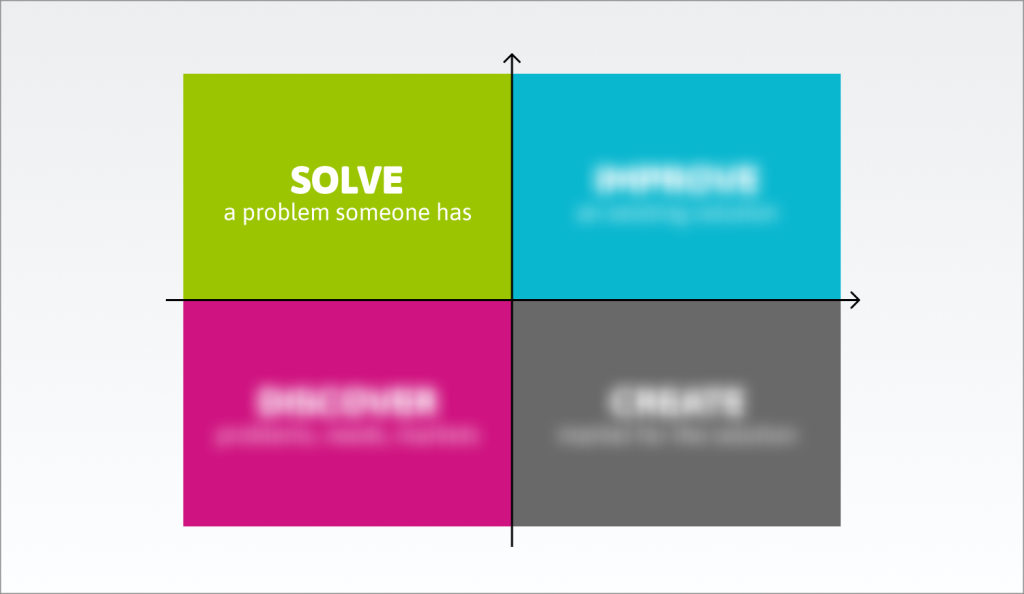
Chances are, you have been told that to make a successful product, you have to build a solution to a problem someone has.
It’s the only opportunity recognised by the old-fashioned Lean Startup doctrine — a limitation that has doomed many startups to output misguided products that no one wants to use.
On the other hand, our Opportunity Matrix expands the horizon of anyone who wants to build a new product with more opportunity types to find Product-Market Fit.

Solving a problem is by far the most popular opportunity, but to be a viable path to Product-Market Fit, two conditions must be fulfilled:
Anduril Industries, a Silicon Valley startup founded by Palmer Luckey (the Oculus Rift designer), had to win the Pentagon’s trust and become a contractor with access to the American army’s unsolved problems.
A lady who runs a Facebook group for new mothers (a safe and trusted space), listens to their unsolved and urgent problems so her husband, a handyman, can build custom products that solve these problems.
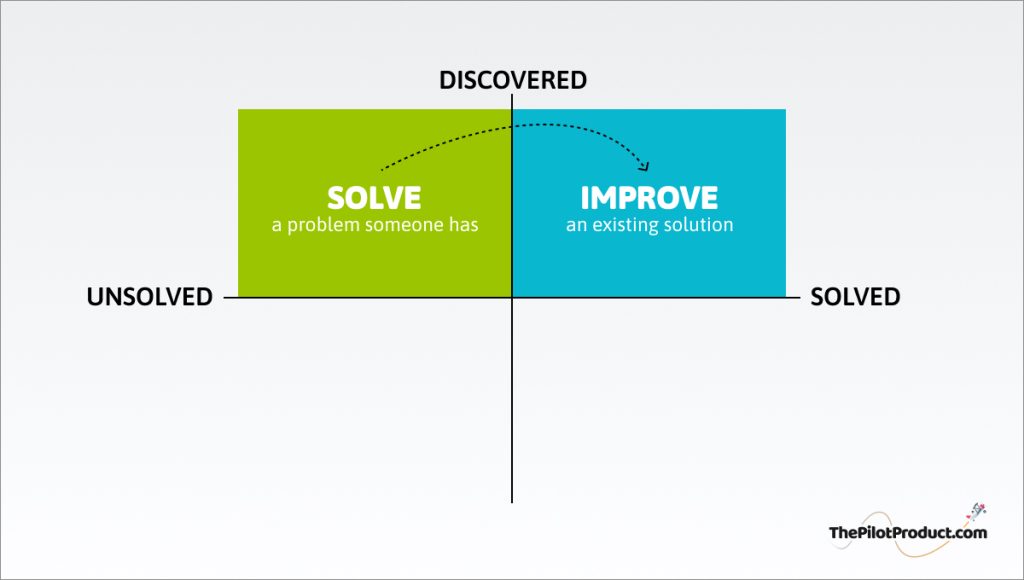
If your pilot product is a solution, but you haven’t positioned yourself as a trusted B2B/B2C partner, it’s very likely that you have a problem with early adoption, lack of market interest and usage.
It’s also very likely that the problem you’re solving has already being solved, albeit in a low-tech primitive way you don’t like. Say with Excel and local files.
In any case, solving an already solved problem is not a viable path to PMF and you better try the next opportunity—improving an existing solution.
Sketch improved Photoshop for the web/digital designers market. Figma improved Sketch by making it more accessible (free browser app), more collaborative and more useful for frontend developers.
Google improved search. Enough said.
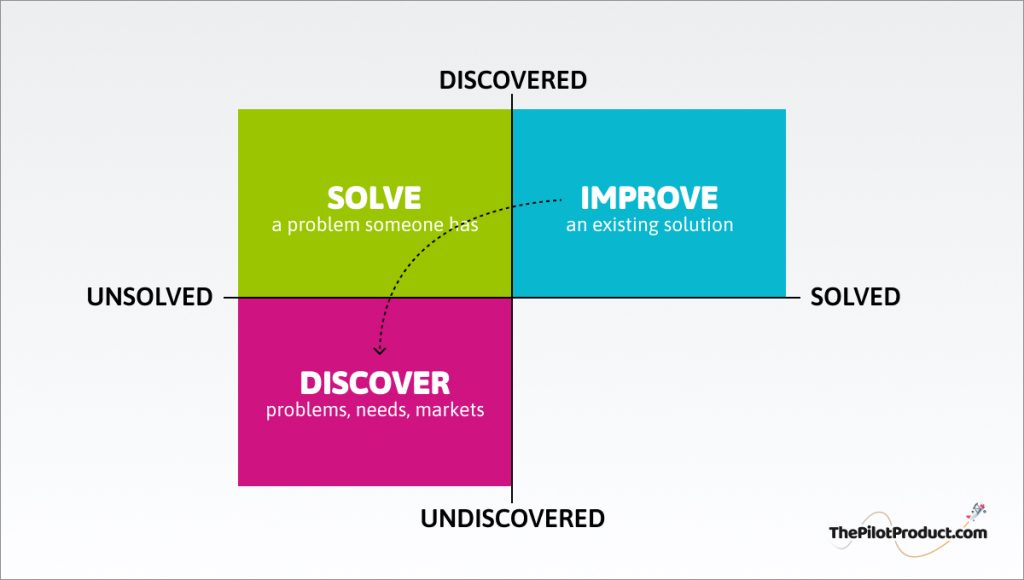
If you have the mindset of a curious researcher and the personality of a playful explorer, you might not be satisfied with merely improving the obvious.
Luckily for you, there are plenty of hidden problems, unmet needs, and underserved markets for you to Discover.
If you are building a solution, you might think your opportunity is type 1: Solve, but if you don’t know for sure that the problem exists, i.e. you assume it exists, then your actual opportunity is Discover.
ChatGPT 3.5 had no built-in utility but exceptional user engagement. Early adopters (mostly developers) started discovering utility (practical applications). Plus, it opened new markets for AI solutions.
Duolingo excels at user engagement, although the utility (actually learning a language) is questionable at best. Opened a vast unaddressed market.
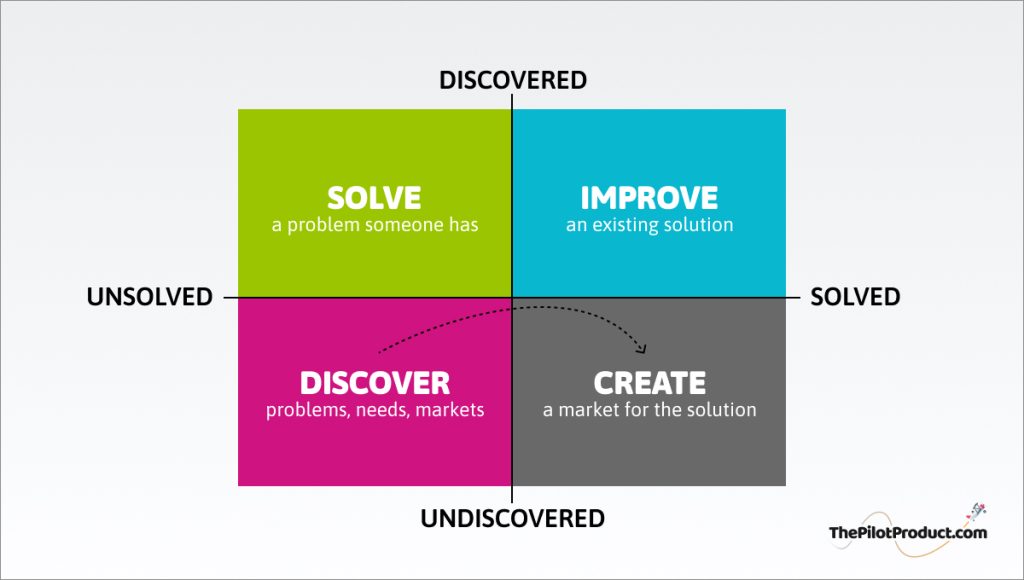
By now you should have made sense of the SOLVED-UNSOLVED and DISCOVERED-UNDISCOVEED axes and you must be wondering: but isn’t this the worst situation to be in — to have built a solution to an undiscovered, unknown and probably nonexistent problem?
Hard no.
See, those who mock your product as a “solution looking for a problem” don’t recognise that this is not only a viable opportunity, but often an advanced evolutionary stage for startups, businesses and even industries.
You can definitely Create a market for your product, for example by:
Have you noticed how you are being pushed GenAI features from everywhere even when you think is not necessary or valuable? This is an extreme example of brute-force market creation by an industry aggressively pushing solutions you didn’t want.
Uber created its initial market by engagement features, then massively expanded by becoming a capital-fuelled price-dumping monopoly. What it turned into afterwards is another story.

We hope that now you can apply the simple and easy to remember notion of the solved-unsolved and discovered-undiscovered axes to identify where you are on the matrix, and what are your viable opportunities.
If you are in a position to know an unsolved problem, go for solving it. But if you see no adoption or usage, then the problem is likely already solved. You still have the opportunity to significantly improve the solution.
If you have the personality and skillset to discover, go for that opportunity. And if it seems that no one wants your product but you have the resources and the marketing skills, try creating a market for your product.
When you are building a new product, you probably can’t afford to develop all the features you can think of.

Rapid development of features without frequent user testing is like running blindfolded without ever being able to check if you’re